

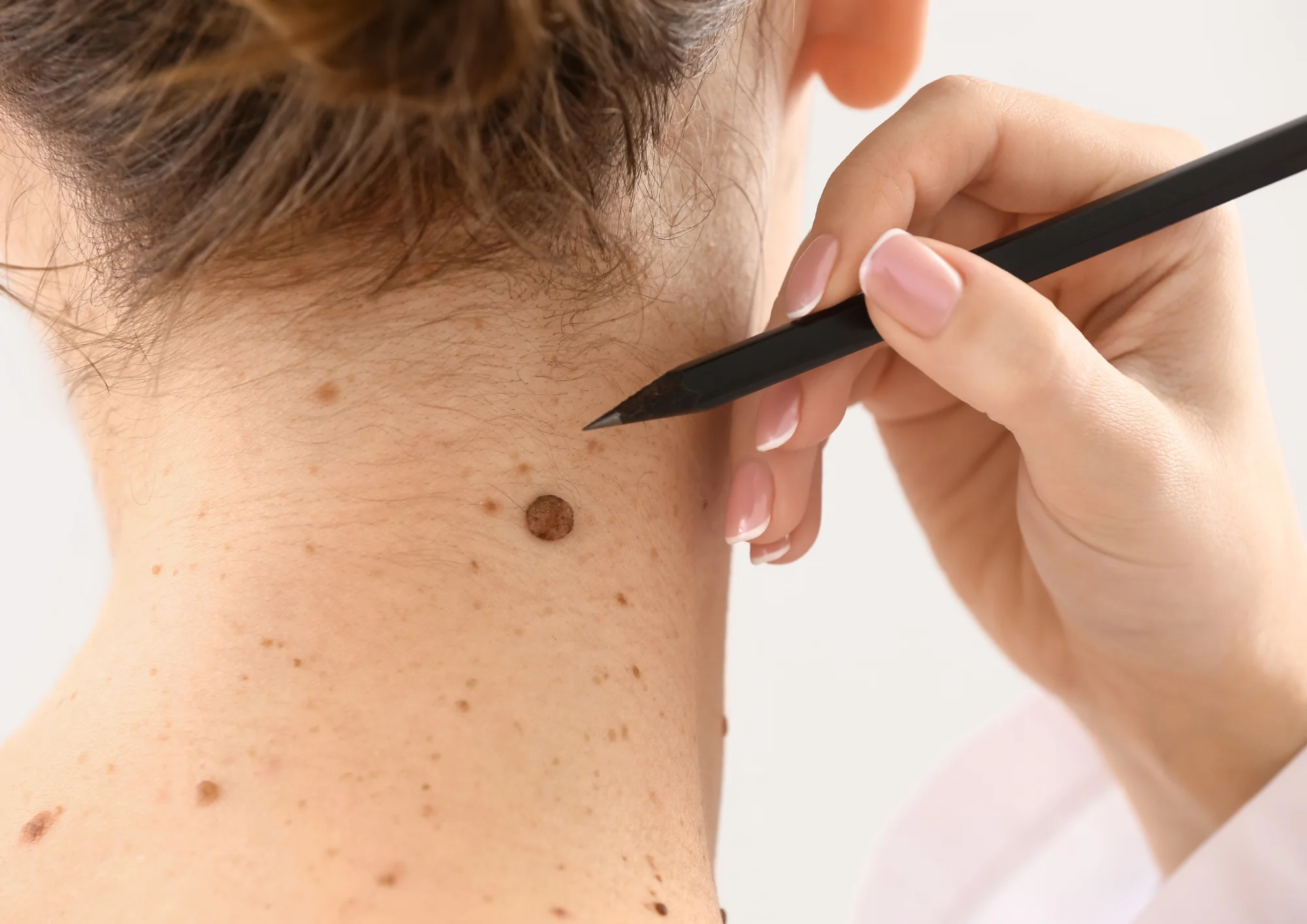
Professional Mole Removal Near Me: A Complete Guide
Moles are everywhere, and the vast majority are nothing to worry about. Still, deciding to remove one throws up a surprising number of questions. This mole removal guide covers both sides of that decision, the cosmetic and the medical, along with the methods clinics actually use and the safety checks that count. The point isn’t to rush you. It’s to help you choose properly.
Key Takeaways:
- A mole might be removed purely for looks, or because something about it needs checking.
- Whatever the reason, a proper skin check always comes first.
- Good clinics test the mole in a lab afterwards, and they hold CQC registration.
Nearly all of us have a mole somewhere we’ve squinted at in the mirror. Most sit there for life and never cause a problem. Every so often, though, one starts to change, or it just lands in an annoying place. That’s usually the nudge that sends people searching for somewhere to get it removed.
Search “professional mole removal near me“, and you’ll be handed a long list in seconds. Here’s the snag. Close to home and clinically excellent are two very different things. A mole is living skin, and removing one safely is a medical procedure, not a beauty tweak, so the closest clinic isn’t automatically the right one.
This guide should help you tell them apart. We’ll cover why moles get removed and how it’s done, then what truly matters when you’re choosing where to book.
Cosmetic and Medical Moles
People remove moles for two very different reasons. Sometimes it’s purely cosmetic because a mole irritates them or sits in a spot they dislike. Other times, it’s medical, because the mole is doing something it shouldn’t.
Dermatologists lean on a simple checklist called ABCDE, and it’s well worth memorising:
- Asymmetry means one half doesn’t match the other.
- Borders that look ragged or blurred are a warning sign.
- Colour has shifted, or it looks uneven across the mole.
- The diameter has crept past roughly six millimetres.
- Evolving means the mole keeps changing, and that’s the big one.
If your mole hits any of those, get it checked before considering removal. The check matters far more than the procedure.
The Right Removal Method
There’s no one-size approach here; what gets used depends on the mole and where it sits, and on whether it needs testing afterwards. Most clinics keep three options open.
Here’s how the three stack up:
- Shave excision skims the mole off level with the skin using a fine blade, which works well for raised, harmless moles.
- Surgical excision cuts the whole thing out and stitches the skin closed, and it’s the route to take whenever tissue needs testing.
- A laser can fade certain flat, clearly benign moles, but it burns the tissue away, leaving nothing to send to a lab.
This is where real skin surgery parts company with a quick cosmetic fix. A careful clinician chooses on safety grounds first, not on whatever leaves the neatest scar.
Proper Skin Check
You shouldn’t have a mole removed the moment you walk in, not without a proper look first. The consultation isn’t red tape; it’s the bit that keeps you safe.
During the appointment, the clinician examines the mole up close, usually with a dermatoscope, which is basically a lighted magnifier. They’ll ask how long it’s been there and whether it’s changed. If something looks off, they’ll often suggest cutting it out so it can go for histology, which means lab analysis of the tissue.
Local Anaesthetic
Worried it’ll hurt? Most people are, and most end up pleasantly surprised. The whole thing happens under local anaesthetic, so the area is completely numb before any work begins.
There’s a small sting as the anaesthetic goes in, then it deadens within a minute or so. As the mole comes off, you might feel some pressure, but there isn’t significant pain. You’re usually done in under half an hour and heading home the same day.
CQC Registration
Once the medical picture makes sense, picking a clinic gets a lot less daunting. What should sway you is regulation, not how short the drive is.
Run through a few checks before you commit:
- The clinic holds Care Quality Commission (CQC) registration for this sort of procedure.
- A doctor or properly qualified medical professional does the actual removal.
- Lab testing is on offer and used whenever a mole calls for it.
A local clinic that ticks those boxes gives you convenience without gambling on safety.
Healthy Skin and Confidence
Removing a mole is hardly ever just about looks. A big part is the quiet relief of knowing your skin is healthy, and that tends to count for more than people expect.
If a mole’s been playing on your mind, book an assessment before you book a removal. A Beaconsfield clinic, such as Define Clinic, can give your skin a thorough check and only proceed with removal if it’s truly the right call. A skin assessment is the simplest way to find out where you stand.
