

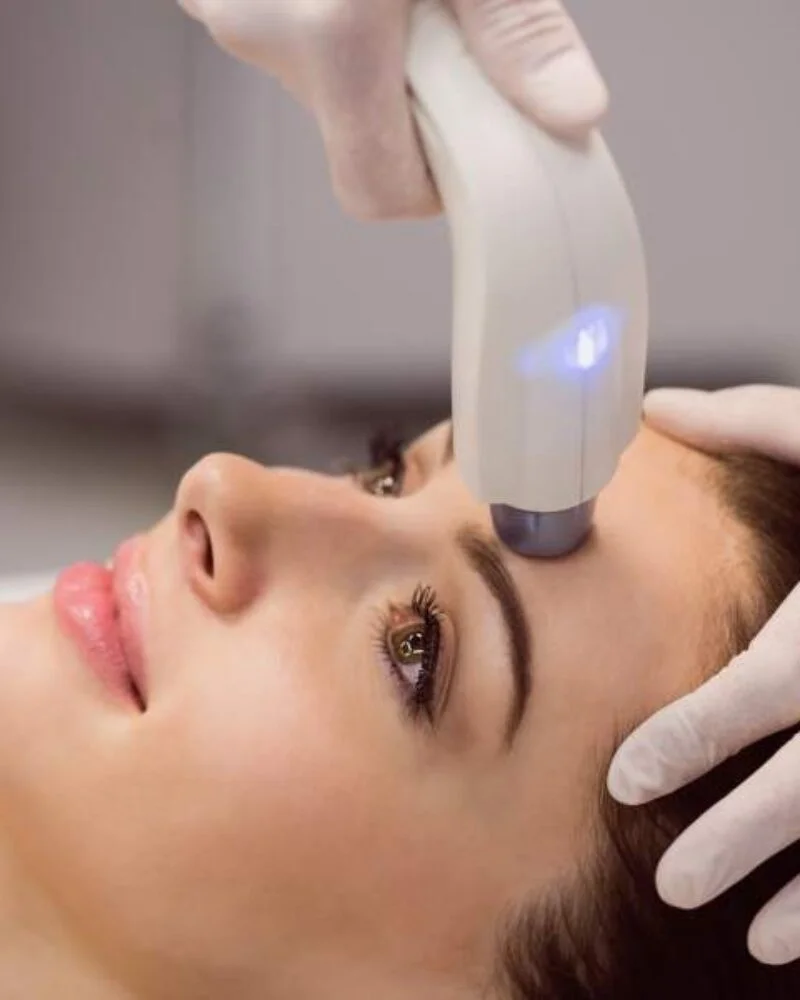
Moxi Laser Treatment: A Simple Guide to Wavelength and Microthermal Zones
Moxi is a skin laser people rave about, mostly because it brightens dull, uneven skin without wiping out a week of your life. The secret isn’t the machine on the trolley. It’s the kind of light Moxi uses, plus the neat way it aims that light at your skin. Get your head round those two, and the treatment stops being a mystery.
Key Takeaways:
- Moxi uses a special light that penetrates the very top layer of your skin.
- It treats your skin in tiny dots, so the skin around each one heals it fast.
- Thanks to that, you get real results but only a few days of downtime.
Older skin lasers had a catch. If you wanted a proper result, you usually paid for it with a week indoors. Most of us can’t just vanish like that. Newer lasers got around it, and Moxi is one of the best of them. The reason comes down to two details that the adverts tend to skip.
So what actually sets the Moxi laser apart? It really boils down to the light it uses and where that light ends up, because the first decides what gets fixed while the second decides how easily you heal. Line those up, and you leave brighter, with barely any fuss.
We’ll take them one at a time, starting with the light, then the tiny dots and how they work together.
What Is Moxi
Moxi is a gentle laser, and honestly, the science is simpler than the name suggests. It delivers controlled heat into the upper layers of the skin without removing the surface layer, stimulating the skin’s natural renewal process. And rather than blasting everything at once, it scatters the energy in a pattern. The result is a laser that freshens the skin while letting it bounce back quickly.
You wouldn’t reach for Moxi to tackle deep wrinkles or heavy scarring. It’s more of a maintenance tool. The whole point is to keep your skin looking clear and even, well before things drift too far.
The 1927 Wavelength
Every laser has a wavelength, which is just a fancy word for the exact type of light it produces. Moxi’s sits at 1927. The number looks random, I know, but it’s doing a specific job. Light at that setting is basically obsessed with water, and guess what fills the top of your skin.
Since the light is absorbed so close to the surface, that’s where all the action happens. It goes after the dull patches and uneven colour up top, plus that tired look that builds over the years. Deeper skin is left alone. Staying shallow is the whole reason Moxi is so gentle and heals so fast.
Microthermal Treatment Zones
Now for the clever part. Instead of hammering your whole face with light, Moxi lays it down in a grid of tiny dots. Every dot is a tiny treated patch, and each one has a little collar of skin around it that never gets touched.
Those untouched collars are secretly the hero. They heal the treated dots quickly, which is why your skin recovers in days, not weeks. The laser still does its job, but your skin never gets hit all over at once. Picture spiking a lawn with small holes instead of ripping up the whole turf.
Low Downtime Explained
Put all that together, and the recovery is something most people can shrug off. For the first day or two, your skin feels warm and looks a bit pink, honestly not far off a mild sunburn.
Then the skin turns slightly gritty for a few days, as those treated dots work up and flake off. A decent moisturiser covers it without drama, and plenty of people just crack on with work. Give it a week, and the fresher, brighter skin starts peeking through.
What Moxi Treats
At its core, Moxi is a tone-and-clarity treatment. It’s a great pick if you’re starting to spot early sun damage or the first hints of ageing. Loads of people book it as prejuvenation, which is a posh way of saying they’re getting ahead before things show.
Here’s the sort of thing it handles nicely:
- Skin that looks dull or a bit patchy in tone.
- Sun spots and freckly pigment that won’t budge.
- Rough texture and pores that seem bigger than they should.
That said, stay realistic about it. Moxi isn’t going to flatten deep lines or serious scars, and any clinic worth its salt will be straight with you about that before you book in.
Choosing A London Clinic
There’s no universal setting on a laser like this. Your skin tone and your history both shift how the treatment should be dialled, so the clinic you choose counts every bit as much as the machine. Are you weighing up the Moxi laser in London? If so, keep an eye out for a few things:
- A practitioner who genuinely studies your skin before pitching any plan.
- Solid experience with your particular skin type, because the safe settings shift from tone to tone.
- A straight answer on how many sessions it’s likely to take.
Any clinic that shapes the treatment around you, rather than pushing one fixed package, is the sort you can trust.
Deciding On Moxi
Moxi works because its thinking is simple yet smart. The light targets exactly where your tone and pigment live, and the dotted pattern keeps your skin quietly healing the entire time. That’s why so many people fold it into their routine without losing a week to recovery.
If any of that sounds like you, a London aesthetic clinic such as Define Clinic London can take a proper look at your skin and tell you honestly whether Moxi is a good match. A quick consultation is the easiest way to find out before you commit to anything.
